


Why Starbucks Won with the “Third Place” Strategy
Competition among global coffee chains is intense. However, Starbucks managed to stand out not only through product quality, but by successfully implementing its “third place” strategy. So what...


Competition among global coffee chains is intense. However, Starbucks managed to stand out not only through product quality, but by successfully implementing its “third place” strategy. So what exactly does this concept mean, and why has it been so effective?
Table Of Content
What Is the “Third Place”?
The concept of the “third place” refers to three main spaces in people’s daily lives:
- First place: Home
- Second place: Work or school
- Third place: A social space to relax and spend time
A third place is where people feel comfortable, socialize, and enjoy their time. It is not just about fulfilling a need, but about experiencing something.
This is where Starbucks differentiates itself: it transforms coffee consumption from a necessity into an experience.
What Did Starbucks Do Differently?
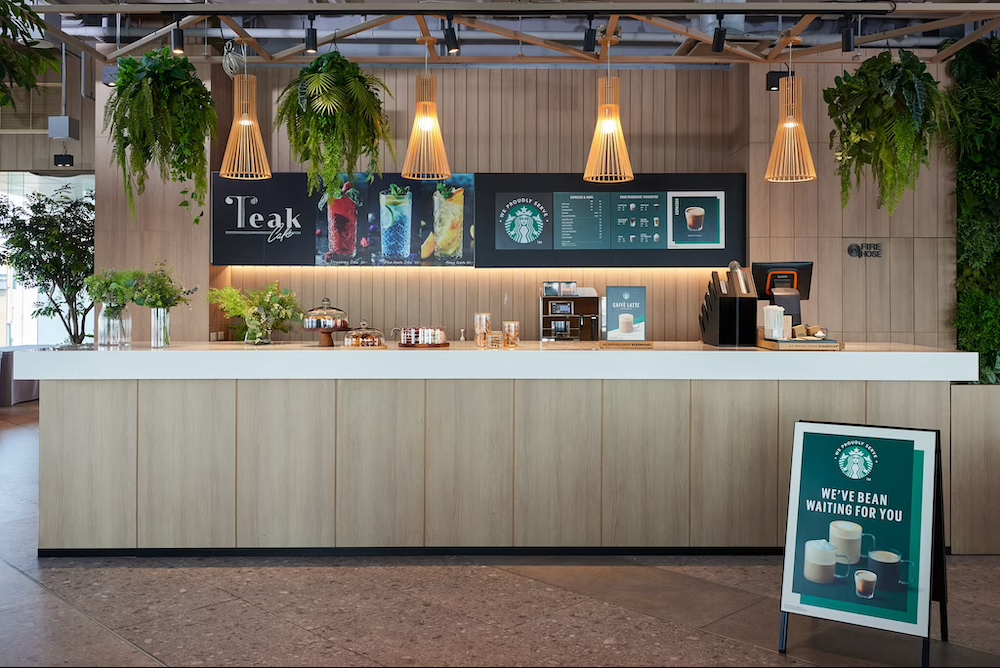
While traditional coffee chains are built around quick consumption, Starbucks chose a different path. The goal was not just to sell coffee, but to create a space where people want to stay.
To achieve this, the brand focused on:
- Designing spaces suitable for long stays
- Offering comfortable seating and open layouts
- Carefully curating lighting, music, and overall atmosphere
As a result, Starbucks positioned itself as a “place” rather than just a coffee provider.
Selling Time, Not Just Coffee
One of Starbucks’ biggest strategic advantages is that it sells “time,” not just coffee.
Customers visit Starbucks to:
- Work
- Hold meetings
- Socialize
- Spend time alone
This shifts consumer behavior. People don’t just grab a coffee and leave—they stay for hours.
This creates two key benefits:
- Stronger emotional connection with the brand
- Higher average spending per customer
Why Do Customers Pay More?
Starbucks is often more expensive than its competitors. Yet, customers continue to choose it. Why?
Because what they are paying for is not just coffee, but perceived value:
- Comfort
- Atmosphere
- A familiar and safe environment
- A sense of lifestyle and identity
As a result, price sensitivity decreases, and the product evolves from “coffee” into an “experience.”
Balancing Standardization and Local Identity
Another key success factor is Starbucks’ ability to balance global consistency with local adaptation.
- The experience is recognizable anywhere in the world
- At the same time, each location reflects subtle local elements
This creates both trust and relevance in different markets.
From Coffee Brand to Lifestyle Symbol
Over time, Starbucks has evolved into more than just a coffee brand—it has become a lifestyle symbol.
Being at Starbucks is often associated with:
- Productivity
- Urban living
- Creativity
This transforms the brand from a functional choice into an emotional one.
Key Lessons for the HORECA Industry
Starbucks’ third place strategy has reshaped the entire HORECA landscape.
Today:
- Coffee shops are becoming hybrid coworking spaces
- Restaurants are designed as experience-driven venues
- Hotel lobbies are evolving into social hubs
Competition is no longer just about product quality—it is about the experience you offer.





No Comment! Be the first one.